Yoga can begin at any age, but the range where it produces the most visible changes in quality of life is between 60 and 80. Preserved joint mobility, maintained balance, nervous-system regulation, improved sleep, sustained autonomy. Research is clear: benefits of adapted yoga for older adults are greater in relative terms than at any other life stage.
Here is how to adapt practice from 60 onwards, what concrete benefits are documented, what precautions to respect and how to integrate blocks, chairs and other props so yoga is safe and effective. I write from my experience training teachers and teaching yoga to students up to 78 years old in Barcelona.
Documented benefits of yoga in older adults
Studies in journals like Journal of Geriatric Physical Therapy and JAMA Internal Medicine document in over-60s practising adapted yoga:
- Reduction of fall risk up to 35% (variable by study) thanks to balance improvement.
- Improvement of flexibility and joint mobility.
- Blood pressure reduction in non-severe hypertensives.
- Sleep improvement and reduced use of hypnotics.
- Mood improvement and reduction of depressive symptoms.
- Cognitive preservation (working memory, sustained attention).
Yoga is probably the practice with the best cost-benefit ratio for older adults: low cost, low risk when properly adapted, high return in autonomy and well-being.
The 4 essential adaptations
1. Chair yoga
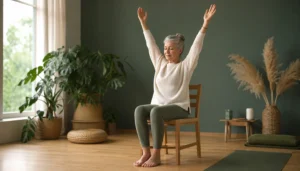
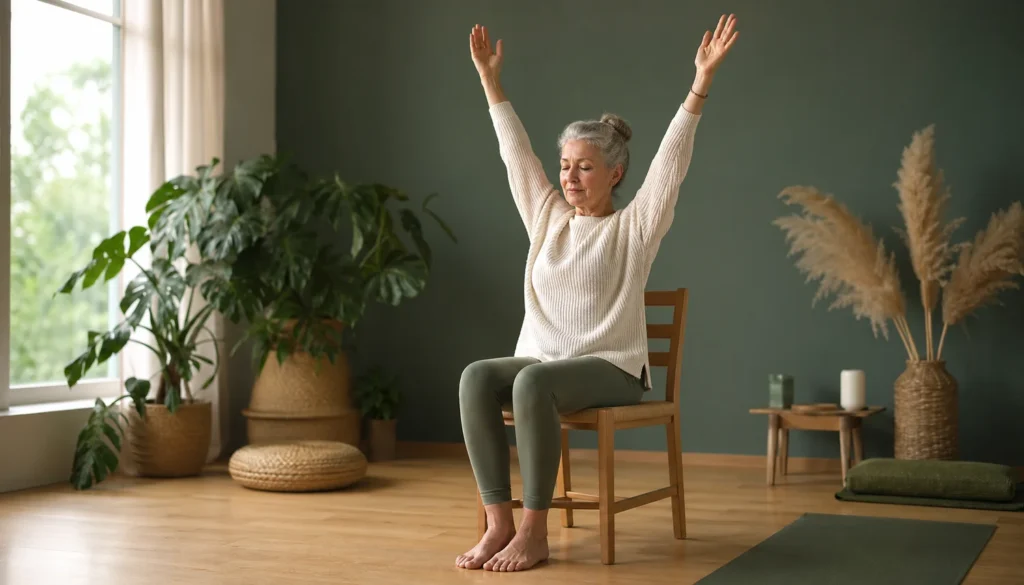
For older adults with reduced mobility, balance issues or difficulty getting on/off the floor. Chair yoga keeps the fundamental principles (alignment, breath, attention) and works spine, shoulders, hips and breath without fall risk.
Basic chair postures: seated tadasana, urdhva hastasana, soft twists, side bends, seated cat-cow, adapted virabhadrasana II.
2. Generous blocks
Bring the floor closer to the hands when flexibility doesn’t reach. In standing forward folds, hands on two blocks instead of the floor. In seated postures, glutes on a block so hips sit higher than knees. Totally changes posture accessibility.
3. Wall support
For balance postures (vrksasana, virabhadrasana III), the wall beside provides safety. Strength and balance are still trained; what changes is the confidence to do the posture without fear of falling.
4. Short times, short holds
Holding a posture 10 seconds × 3 sets is more effective and safer than 30 seconds × 1 set. Muscle fatigue in older adults causes falls faster. Work with short repetitions with rest between each.
“Yoga in older age is not ‘less yoga’. It is intelligent yoga, where each posture is dosed to the specific body practising it.”
Suza Francina, The New Yoga for Healthy Aging (2007)
The 8 most useful postures from 60 onwards
- Standing tadasana (with wall support if needed). Works axis and balance.
- Seated tadasana on chair with hands on thighs and elongated spine. 1 minute.
- Cat-cow on all fours or seated on chair. Spinal mobility.
- Virabhadrasana II with wide base and arms in cross. Leg strength and hip opening. 30 seconds each side.
- Vrksasana with wall support. Single-leg balance. Start with foot at ankle height, not higher.
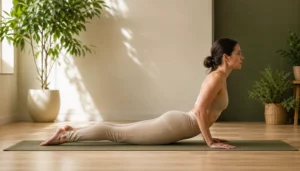
- Low cobra with bolster under chest. Thoracic mobility with support.
- Setu bandhasana sustained with block under sacrum (restorative variant). Effortless chest opening.
- Savasana with bolster under knees and warm blanket. 10 minutes. The most important one.
What to avoid (and why)
- Deep inversions (sirsasana, sarvangasana) with osteoporosis, glaucoma or uncontrolled hypertension.
- Extreme axial load on the spine with severe osteoporosis: nothing putting weight on the head.
- Deep forward folds with straight legs with osteoporosis (vertebral fracture risk).
- Any balance posture without nearby support in people at high fall risk.
- Very dynamic yoga without prior base: vinyasa, ashtanga.
How to start
If you’ve never practised yoga and are over 60:
- Confirm with your doctor that there’s no specific contraindication for your health condition.
- Look for senior-specific classes, not general adapted classes. Homogeneous groups are far more useful.
- Start with low frequency: 1-2 classes per week, 30-45 minutes each.
- Minimum daily home practice: tadasana 2 minutes, cat-cow 5 cycles, savasana 5 minutes. Ten daily minutes produce change.
- Patience with the learning curve: 3 months to start feeling visible results, 6-12 months for sustained change.
At my Barcelona studio I work with students up to 78 years old in small groups where I can give individualised attention. If you’re interested, the first class is a free trial.