Nadi shodhana — alternate-nostril breathing — is probably the single most useful pranayama for general health. It balances the cerebral hemispheres, regulates the autonomic nervous system, improves concentration, prepares for meditation and, practised regularly, improves sleep quality. And it is safe for almost everyone.
Here is the classical technique step by step, the proper mudra (vishnu mudra), breath ratios by level, and when to practise. I write from the classical training I received at Sivananda Ashram (India) and twenty years teaching pranayama.
What nadi shodhana does in the body
The name has two parts: nadi (“subtle energy channel” in Sanskrit) and shodhana (“cleansing” or “purification”). In the tantric tradition, nadi shodhana “cleanses” the main subtle channels (ida and pingala). In contemporary reading:
- Balances both cerebral hemispheres by alternating air entry through each nostril (well-documented neurological correlate).
- Regulates the autonomic nervous system towards a calm-alert ventral-vagal state.
- Reduces heart rate and blood pressure in regular practice (8-12 week studies show measurable effects).
- Improves concentration and working memory (studies in students and professionals).
Vishnu mudra: the proper gesture
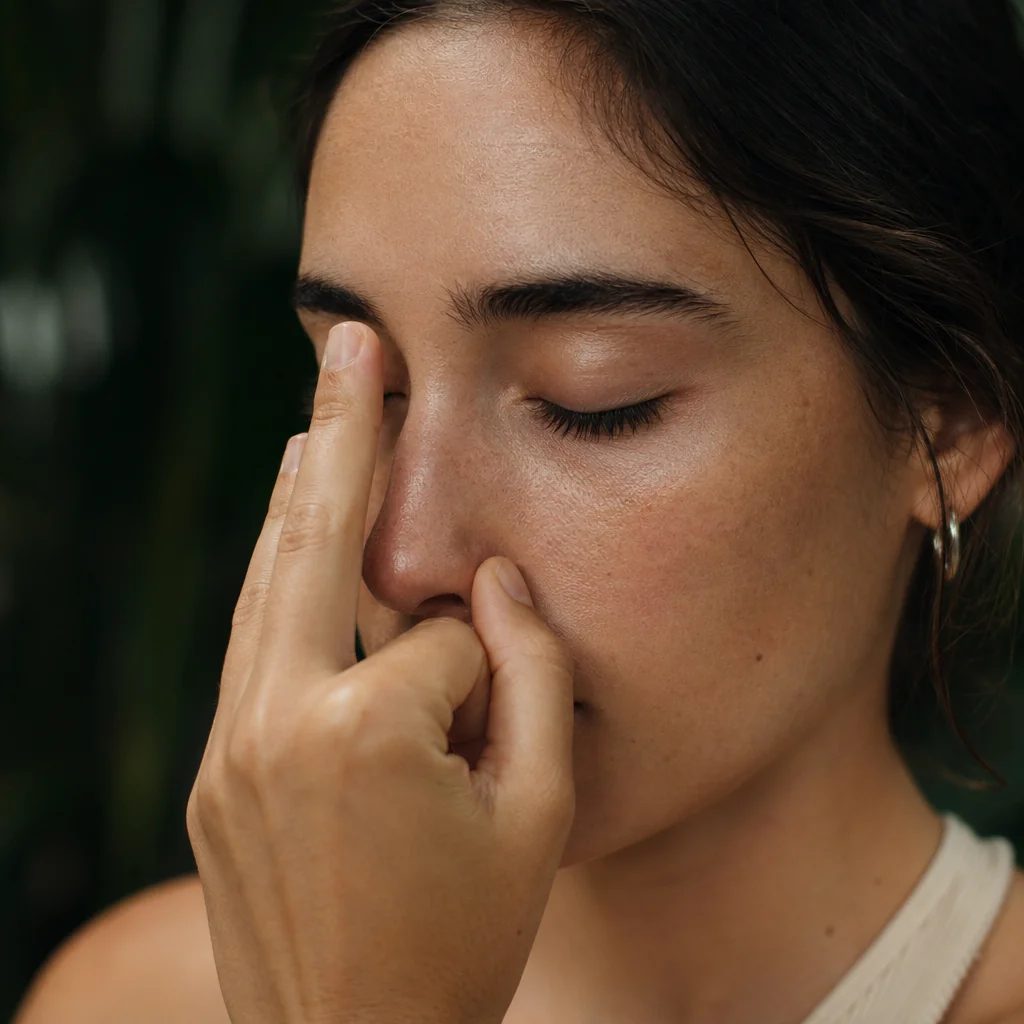
The classical mudra for nadi shodhana is vishnu mudra:
- Right hand (left-handers can use the left).
- Thumb and ring finger extended.
- Index and middle fingers folded on the palm.
- Little finger relaxed.
The thumb closes the right nostril, the ring finger closes the left. Some modern schools (Iyengar) rest the index finger on the brow centre, but classical vishnu mudra is most widespread and works perfectly.
Classical technique step by step
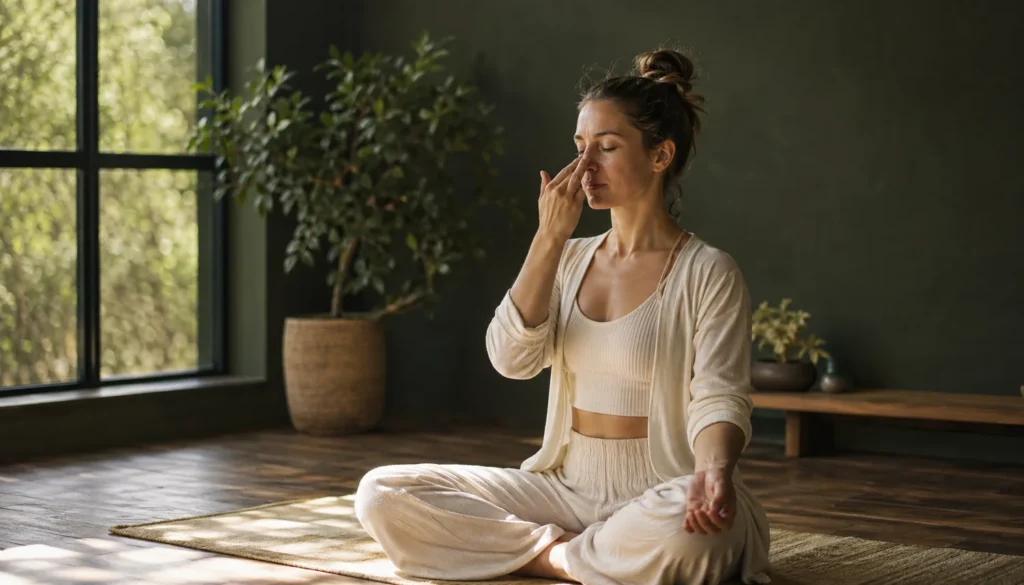
- Posture. Seated in sukhasana on cushion or chair with upright back and elongated spine. Left hand in chin mudra resting on the left knee.
- Right hand in vishnu mudra. Thumb at the right nostril, ring finger at the left. Right elbow relaxed.
- Close the right nostril with the thumb. Inhale 4 seconds through the left nostril.
- Close both nostrils (ring on left, thumb on right) and hold 2 seconds optionally. Beginner: no retention; go straight to step 5.
- Release the thumb and exhale 6 seconds through the right nostril. Keep the left closed with the ring finger.
- Inhale 4 seconds through the right nostril (left still closed).
- Close both and hold 2 seconds optionally.
- Release the ring finger and exhale 6 seconds through the left nostril.
- This is one full round. Start with 5 rounds. Progress to 10-15.
Progressive ratios
- Beginner (weeks 1-4): 4-6 (inhale 4, exhale 6) no retention. 5 rounds.
- Intermediate (months 2-3): 4-2-6 (inhale 4, hold 2, exhale 6). 8 rounds.
- Advanced (month 3+): 4-4-8 or 5-5-10. 10-15 rounds.
Golden rule: the exhale is always longer than the inhale. That is what activates the vagal brake. If retention feels uncomfortable at any point, return to the no-retention version without guilt.
“Nadi shodhana is the breath of balance. Practised regularly, it recomposes the nervous system as few other practices can.”
B.K.S. Iyengar, Light on Pranayama (1981)
When to practise
- Morning fasting: the classical traditional moment. 5-10 minutes before breakfast prepare the nervous system for the day.
- Before meditating: 3 rounds before sitting significantly improve meditation depth.
- Before cognitive effort: 5 minutes before an exam, a presentation or sustained intellectual work.
- Before sleep: 5 minutes in bed with long ratios (4-8) ease sleep onset.
- In moments of acute stress: 3-5 rounds can lower sympathetic activation quickly.
Common mistakes
- Forcing the breath. It must be silent, effortless. If you feel breathless, lower the seconds.
- Lifting shoulders on inhale. Shoulders always relaxed.
- Closing nostrils with too much pressure. Just enough to block air. No marks on the nose.
- Practising with congested nose (cold, acute sinusitis). Wait until clear.
- Starting with long retentions. Retentions enter when no-retention ratios feel natural.
When not to practise
- Nose congested by cold or acute sinusitis.
- Very acute anxiety crisis (better start with the simple 4-8 breath).
- Severe uncontrolled hypertension with long retentions (long retentions may momentarily raise pressure).
- Pregnancy: only without retentions.
If you want to learn nadi shodhana with direct correction, at my Barcelona studio we integrate classical pranayama into every hatha yoga class.