Returning to yoga after giving birth is not resuming your previous routine. It is a specific recovery of three structures that pregnancy and birth profoundly modify: the pelvic floor, the abdominal wall (often with diastasis recti), and overall body posture. Skipping this stage and going straight back to vinyasa or classical sit-ups slows recovery and increases the chance of mid-term problems.
Here is when to return, what to do in the first 12 weeks, what to absolutely avoid and how to build a return to yoga that respects real postpartum physiology. I write from specific prenatal and postpartum yoga training and experience accompanying mothers through this transition.
When to return (physiological criterion)
- 0-6 weeks after vaginal birth: active rest. Walking, conscious breath, mother-baby connection. No postural practice.
- 6 weeks after vaginal birth: medical check-up. If all clear, start with adapted postpartum yoga.
- 0-8/10 weeks after C-section: longer rest. Wait for explicit medical clearance for abdominal mobility.
- 8-10 weeks after C-section: with clearance, start adapted postpartum yoga. Special care for the scar.
“Starting adapted yoga” doesn’t mean “returning to gentle vinyasa”. It means starting specific recovery practices. Returning to regular practice can take 3-6 months with proper progression, before any transition to dynamic styles.
The 5 priorities of postpartum yoga
1. Pelvic floor
The pelvic floor has held pregnancy for 9 months and, in vaginal birth, has gone through extreme distension. Its recovery is slow and specific. Combine:
- Hypopressive work / soft mula bandha: gentle perineal contraction during exhale, not fast intense Kegel-style contractions.
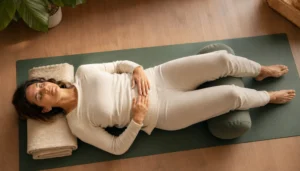
- Postures with perineal support: viparita karani, sustained baddha konasana with cushions.
- Key recommendation: pelvic-floor physiotherapist review before resuming any exercise. Not optional.
2. Abdominal diastasis
60% of women have separation of the rectus abdominis (diastasis) after birth. Normal short-term, problematic if it chronifies. Specific work:
- Activation of transverse abdominis (deep layer) without activating the rectus.
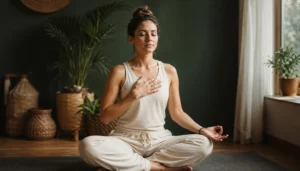
- Conscious diaphragmatic breath with soft transverse contraction on exhale.
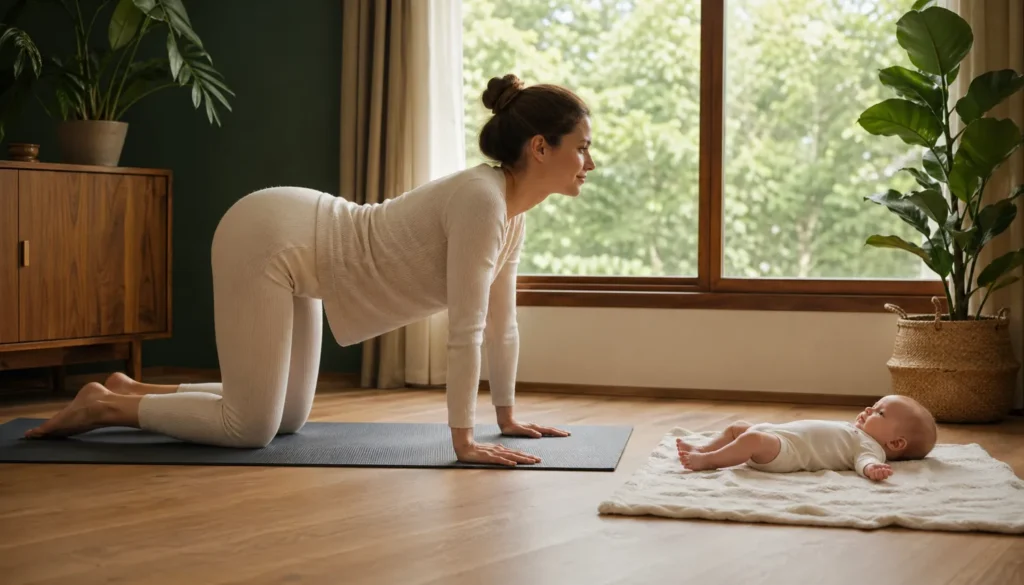
- All-fours postures (cat-cow, modified plank on knees and forearms).
- Avoid: classical sit-ups, navasana, postures generating “doming” of central abdomen.
3. Overall posture
Pregnancy shifts the centre of gravity and, postpartum, many women keep a kyphotic posture with shoulders forward (also from hours of breastfeeding). Work:
- Soft chest openings: low cobra, postures with a block between the shoulder blades supine.
- Thoracic mobility: cat-cow, shoulder circles.
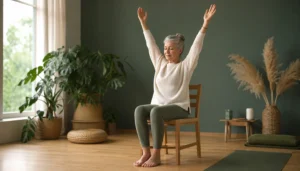
- Tadasana with axis awareness 3-5 min daily.
4. Nervous system
Postpartum is sustained autonomic exhaustion. Sleep deprivation, breastfeeding, hypervigilance towards the baby. Practices:
- Restorative yoga with support: 5-10 min daily.
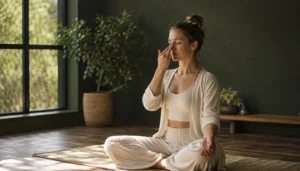
- Prolonged-exhale pranayama (4-8, bhramari).
- Use baby naps for 10 min savasana (not to rush other tasks).
5. Mother-baby connection
Postpartum yoga can integrate the baby into the practice (yoga with baby). Baby on the mat while you do cat-cow, sukhasana with baby on the lap, savasana with baby on the chest. A real therapeutic component, not just logistics.
“Postpartum is not ‘returning to normality’. It is building a new normality that integrates motherhood into the body and into the practice.”
Janice Clarfield, Yoga for Pregnancy (1997)
What to avoid the first 12 weeks
- Any vinyasa, ashtanga or dynamic flow. Transitions load the pelvic floor and abdomen before recovery.
- Classical sit-ups. Worsen diastasis.
- Full plank until diastasis closure is confirmed.
- Inversions until pelvic floor tone is confirmed.
- Jumps. Significantly load the pelvic floor.
- Postures with direct abdominal compression.
- Activating pranayamas (kapalabhati, bhastrika) during breastfeeding.
A safe 20-minute practice
For weeks 6-12 postpartum (with medical clearance):
- Opening (5 min): conscious diaphragmatic breath with transverse activation on exhale.
- Mobility (8 min): cat-cow · sukhasana with soft twists · low cobra · tadasana 1 min with awareness.
- Restorative (5 min): viparita karani with cushion under hips.
- Closing (2 min): savasana with baby beside or on the chest.
If you come from pregnancy and plan your return to yoga, ideal is to work 4-6 weeks in individual postpartum yoga sessions before returning to group class.