“Therapeutic yoga” is a phrase used today rather loosely. It gets called therapeutic yoga to a soft group class for older adults, an incense massage, a breathing session for anxiety. The truth is that therapeutic yoga, taken seriously as a discipline, is something more specific and — applied with judgement — far more useful.
In this article I explain what therapeutic yoga actually is, how it differs from a regular yoga class, what situations it is designed for and when it is not the right tool. I write from specific training in therapeutic yoga applied to grief and a Master’s in Music Therapy (UAB) that allows me to work with the sound dimension of nervous-system regulation as well.
What therapeutic yoga is
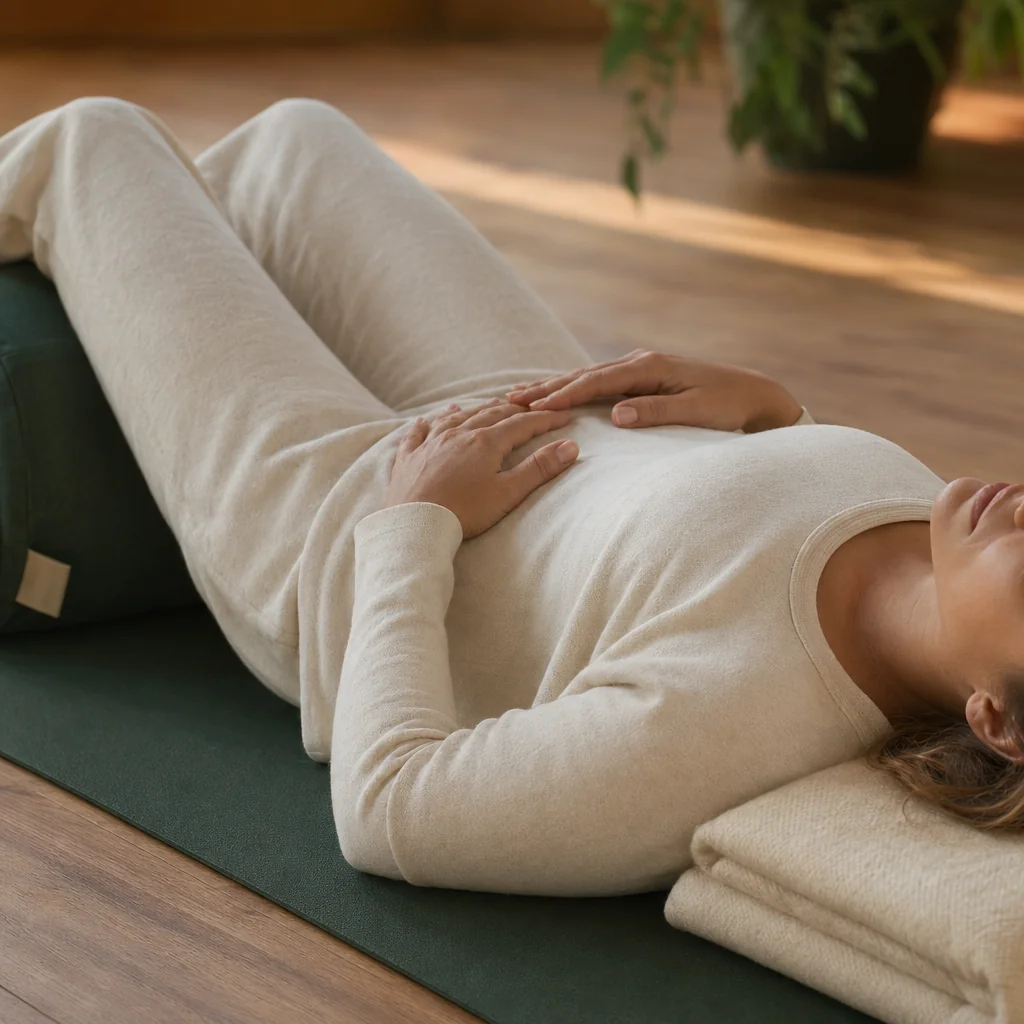
Therapeutic yoga is the individualised application of yoga’s tools (posture, breath, meditation, relaxation, sound) to the care of one person with a specific need. The key word is “individualised”: it is not a class style or a level. It is case-by-case work.
A therapeutic yoga session always begins with:
- An initial interview covering medical history, injuries, medication, expectations and, if available, reports from your doctor, physiotherapist or psychotherapist.
- A personalised protocol selecting the specific tools for that person: which asanas (often modified), which pranayama, which type of relaxation.
- Ongoing follow-up adjusting the practice to the person’s evolution.
It is neither medicine nor psychotherapy. It is a complementary practice. That distinction matters because it defines what it can and cannot do.
How it differs from a regular yoga class
A group hatha class, even a gentle one, is not the same as a therapeutic yoga session. The differences are three and they are substantial:
- Individual vs group. A group class works around a common denominator. A therapeutic session works from your specific situation.
- Therapeutic goal vs general well-being. A regular class aims at health and vitality. A therapeutic session accompanies a specific clinical or emotional process.
- Specific teacher training. Being a yoga teacher (RYT 200 or 500) is not enough. Therapeutic yoga requires further training in applied anatomy, psychology, clinical contraindications and, depending on specialisation, in the type of situation you’ll be supporting.
What it is designed for
Therapeutic yoga has well-documented applications in several situations. The four most common reasons people come to my practice:
1. Anxiety and chronic stress
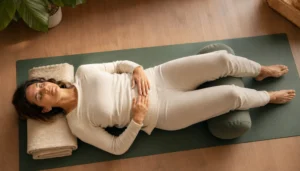
Probably the most frequent reason for consultation. Therapeutic yoga for anxiety combines breathing practices (lengthening the exhale, alternate-nostril breath), supported restorative postures (sustained savasana with bolsters, viparita karani) and progressive training in self-observation. Studies in journals such as Journal of Affective Disorders document measurable reductions in trait anxiety after 8–12 week supervised programmes.
2. Chronic pain (especially low back)
Chronic pain has two dimensions: tissue and nervous. Therapeutic yoga acts on both. The structural side: postures that reorganise body mechanics. The nervous side: regulation of the autonomic nervous system, which is almost always dysregulated in chronic pain. The American College of Physicians has explicitly included yoga among first-line recommendations for chronic low-back pain since 2017.
3. Yoga for grief
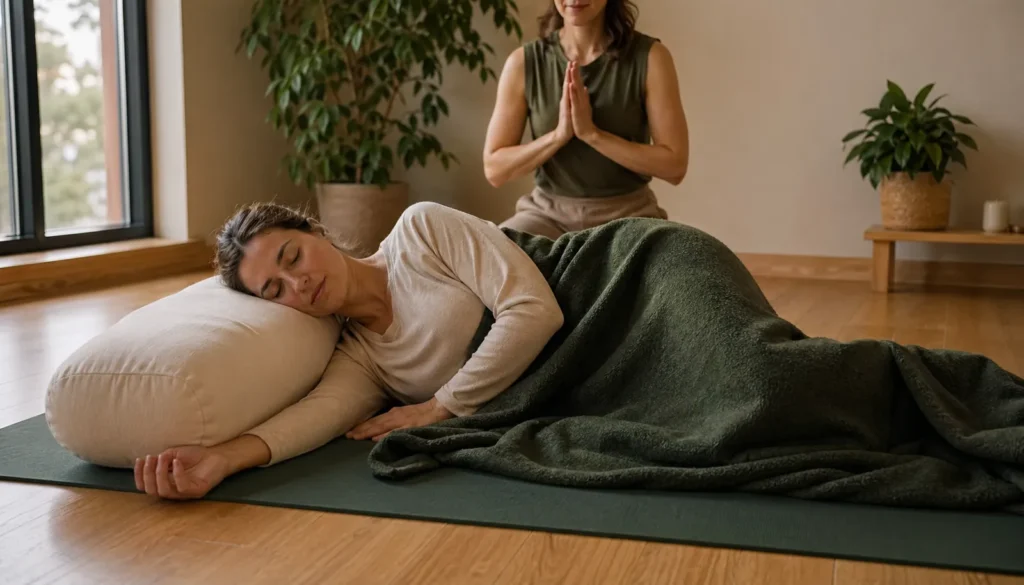
It is the main specialisation of my work in Barcelona and the reason many people come to therapeutic yoga. Grief is not cured: it is accompanied. Therapeutic yoga applied to grief is not about “helping you get over” the loss; it offers a space where your body — where grief most lives — can process what words cannot yet name. I combine soft posture, breath and music therapy in individual work or in small groups.
4. Trauma-sensitive yoga
Trauma-sensitive yoga developed out of the work of Bessel van der Kolk and David Emerson at the Boston Trauma Center. Its logic: in people with trauma, the body holds what the mind cannot integrate. The practice teaches the recovery of the felt sense of inner safety through one’s own body. It is complementary to psychotherapy, never a substitute.
“The body keeps the score. The body remembers. If the mind cannot access what happened, the body often can.”
Bessel van der Kolk, The Body Keeps the Score (2014)
When therapeutic yoga is not the tool
It needs saying clearly. Therapeutic yoga is not the right tool when:
- You are in an acute phase of a psychiatric condition (active psychosis, mania, active suicidal ideation). What is needed there is medical and psychotherapeutic care.
- You have an acute injury or recent post-op without medical clearance for movement.
- You are looking for a diagnosis or curative medical treatment: therapeutic yoga accompanies; it does not diagnose or cure.
- Your motivation is weight loss or muscle gain: there are better-suited practices for those.
What a typical session looks like
An individual therapeutic yoga session lasts 60 to 75 minutes. Typical structure:
- 5-10 min check-in. How you arrive today, what has happened since the last session.
- 10 min of breath work (sometimes lengthening the exhale, sometimes alternate-nostril, sometimes simple observation).
- 25-35 min of postural practice with adapted asanas and use of props (blocks, blankets, bolsters).
- 10-15 min of deep relaxation with or without sound accompaniment.
- 5 min closing, observations and, if relevant, home practice indications.
What to look for in a therapeutic yoga teacher
- Specific therapeutic-yoga training (not just general yoga teacher training).
- Specialisation in your specific situation: someone trained in grief is not the same professional as someone trained in pelvic floor, even though both may be therapeutic yoga teachers.
- Documented clinical practice: years of experience, accompanied cases, supervision.
- Ability to refer. A good professional knows when what they have in front of them needs a doctor, physiotherapist or psychotherapist, and says so clearly.
How we work at Yoga Clio
At my Barcelona studio I offer two formats. The first is individual therapeutic yoga, in person or online, with a personalised protocol after a free initial interview. The second is yoga for grief in small groups, where up to six people share the same process with the same careful adaptation. The work combines soft posture, pranayama and, when it adds value, sound therapy and music therapy.
If you think therapeutic yoga may help you, the first step is to schedule an initial no-commitment conversation to see whether your situation fits what this practice can offer. If it doesn’t, I’ll point you to a resource that does.