If you’ve started getting interested in yoga, this has happened to you: you Google “yoga classes near me” and twenty different styles come up. Hatha. Vinyasa. Yin. Ashtanga. Kundalini. Restorative. Iyengar. Bikram. Are they the same thing with different names? Is one better? Which one is for you?
Good news: there are six main families covering almost everything you’ll find in a studio. The right one for you depends on what your body wants and where you are in life. Here is how I see it after twenty years teaching hatha yoga and training teachers (RYT 500 with the Yoga Alliance), including the honesty to tell you when each style is not for you.
The 6 main families of modern yoga
1. Hatha yoga
The parent of nearly all modern styles. Slow postural work, focus on alignment, conscious breath, postures held 5-15 breaths. Slow, technical, builds a solid base. If you’ve never practised, start here. It’s what I teach in the studio.
Asks: willingness to go slow, patience with technique.
Gives: deep alignment, integrated breath, foundation for understanding every other style.
2. Vinyasa yoga
Dynamic, flowing yoga where one posture connects to the next at breath pace. Probably the most popular style in Western studios. More cardiovascular than hatha; requires some baseline.
Asks: minimum strength and stamina, ability to breathe through movement.
Gives: conditioning, internal heat, meditative feel from the breath rhythm. A good option if you also want an “exercise” component.
3. Yin yoga
The opposite of vinyasa. Passive postures held 3-5 minutes, mostly seated or supine, focused on deep tissues (fascia, tendons, ligaments). Deep articular work and noticeable emotional load.
Asks: tolerance of stillness and sustained discomfort.
Gives: deep tension release, joint health, space to process emotion. Caution if you have hypermobile joints: yin can over-stretch.
4. Ashtanga yoga
Pattabhi Jois’s lineage. Fixed series of postures progressing in difficulty, practised in strict order. Physically demanding, disciplined, built on ujjayi breath and bandhas.
Asks: commitment, athletic capacity, daily discipline.
Gives: notable strength, fast physical transformation, clear progression. Not recommended with shoulder, wrist or knee injuries.
5. Kundalini yoga
A separate tradition with its own philosophy. Mixes kriyas (specific sequences), intense pranayama, mantras and meditation. Recognisable aesthetics (white turbans, Sanskrit chants), though that’s culturally separate from the practice.
Asks: openness to a devotional/energetic layer.
Gives: fast nervous-system effects, intense sensations, sense of community. I don’t teach kundalini but respect properly trained teachers.
6. Restorative yoga
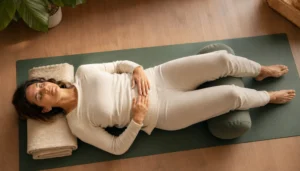
Passive postures with many props (bolsters, blankets, blocks), held 5-20 minutes. No effort. Goal: deep nervous-system rest. The base of therapeutic yoga.
Asks: capacity to stay still without agitation.
Gives: deep rest, autonomic regulation, space to process accumulated fatigue. Ideal in perimenopause, grief, chronic exhaustion.
“Yoga is not a universal technique: each style is a tool for a need. Know the tool before choosing it.”
T.K.V. Desikachar, The Heart of Yoga (1995)
How to choose by your moment
- If you’ve never done yoga: hatha. No qualifiers.
- If you come from fitness and want continuity: vinyasa.
- If your body is stiff and needs to release: yin (with caution).
- If your head won’t stop and you need deep calm: restorative.
- If you want discipline, structure and clear progression: ashtanga.
- If you’re going through grief, chronic anxiety or pain: therapeutic yoga (not a class style — individual accompaniment).
Common mistakes when choosing
- Choosing by studio aesthetics. An Instagram-friendly studio guarantees nothing about teaching quality.
- Choosing by proximity alone. If your goal is real, it’s worth travelling 15 more minutes for the right teacher.
- Starting with ashtanga without a yoga base. You’ll learn bad habits through speed.
- Sticking to a style only because you know the teacher. If your body changes, try another style.
What all styles share
All these styles rest on the same philosophical structure: the 8 limbs of yoga according to Patanjali. What differs is which limb each one emphasises. Understanding that map helps you choose with judgement.
If you live in Barcelona and want to try classical hatha yoga before deciding, at my Horta studio we work in small groups and the first class is a free trial.