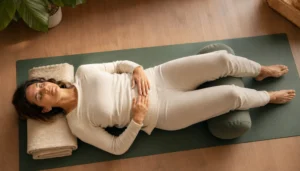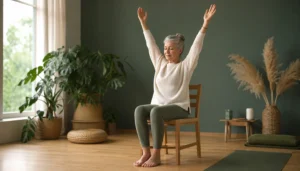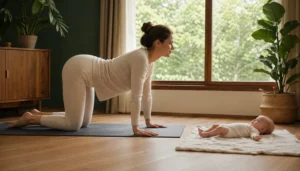

Yoga doesn’t stay on the mat. If you limit it to the 60-minute class twice a week, you keep about 10% of what this practice can give you. The other 90% happens off the mat: in how you wake up, eat, manage relationships, end your day.
I’m not talking about turning into an Instagram yogi with a crystal altar and a 5am routine. I’m talking about specific, sustainable habits that integrate what you learn on the mat into the rest of the day. After twenty years of daily practice and teaching, here are the seven that genuinely make a difference.
7 habits that sustain a living yoga practice
1. One conscious breath a day (minimum)
Pranayama is not just for class. A single conscious breath — inhale 4, exhale 6 — at least once a day at a transition (before starting work, before eating, before bed) reminds you that your nervous system responds to your breath.
2. Movement on waking
Three minutes. Not five, not ten if you don’t feel like it. Three. Tadasana 30 seconds, cat-cow 5 cycles, downward dog 5 breaths. Awake body, spine ready for the day. The difference between starting the day from your body or from your head.
3. Eating seated and screen-free (at least once a day)
Pratyahara — withdrawal of the senses from external noise — translated to the kitchen. One meal a day without phone, computer or TV. Seated. Chewing. You’ll register satiety sooner, sleep better and reduce digestive complaints. Yes, one single meal.
4. A transition pause between roles
When you finish work and step into your home. After a hard conversation. When you pick up the kids. Three breaths in the lift or in the car before stepping into the next role. Not dissociation: giving your nervous system one second to register the change of context.
5. An honest relationship with rest
Savasana extended into life. If you’re tired, rest. Not “I’ll relax five minutes on the sofa” while still scrolling. Real rest: eyes closed or gaze drifting through a window, no stimulus, ten minutes. Society teaches that rest is wasted time. Physiology says the opposite.
6. One phone-free conversation a day
Direct application of satya and ahimsa: being fully present for someone. One conversation a day — partner, child, friend, neighbour — where the phone is not visible and there’s no screen. Five minutes count. What changes: the quality of your relationships in the medium term.
7. A conscious end to the day
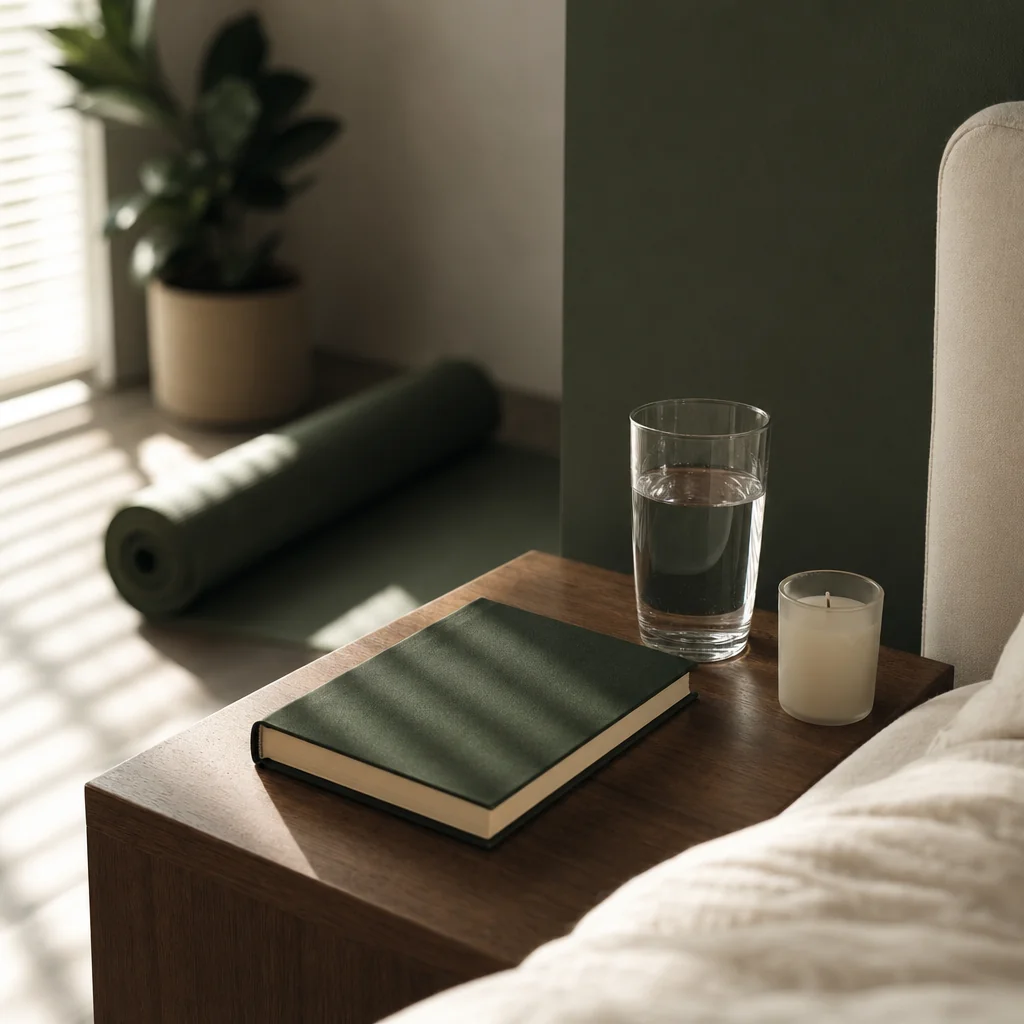
Three lines in a journal before bed. What did I see today worth remembering? What was hard? What do I leave here, not bringing it to bed? The most useful pre-meditation I know for sleeping better. No screens 30 minutes before bed. That last bit — the hardest.
“Yoga is not what happens on the mat. The mat is the laboratory. Life is the experiment.”
Donna Farhi, Bringing Yoga to Life (2003)
How to bring this in without becoming rigid
The most common mistake: trying all seven at once. The consequence: dropping all of them after two weeks. Instead, begin with one. The easiest one. Hold that one for three weeks until it sticks. Only then add the next. If in three months you have three solid habits, you’re doing perfectly.
Yoga as a way of life is not about reaching a “spiritual” version of you. It is about slowly building a kinder way to inhabit your day. And that shows up far more in how you look after a year than in how your yoga reel looks after a class.
If you want real guidance for integrating all of this, at my Barcelona studio we work with classical hatha yoga from this integrative perspective. First class is a free trial.