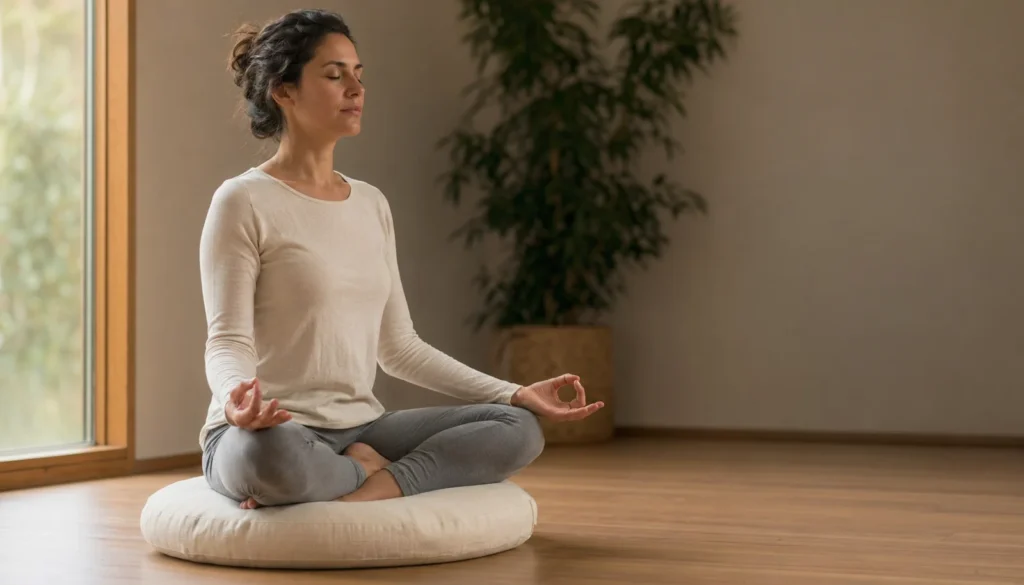
There is a gesture you make thousands of times a day without thinking, and it has the power to change how you feel in seconds. You are doing it right now: you are breathing.
Yoga has been working with that gateway for over two thousand years. It called it pranayama: the science of conscious breathing. Although it sounds like a distant tradition, what it reveals matches what modern physiology now tells us about the vagus nerve, the parasympathetic system and emotional regulation.
I am Clio Byrne, hatha yoga teacher (RYT 500 by Yoga Alliance) trained in the Sivananda tradition in India. In this article I explain what pranayama is, why conscious breathing changes the nervous system, three accessible techniques to start, and when it is best not to practise.
What is pranayama?
The word comes from Sanskrit and combines two roots: prana (vital energy, life force) and ayama (extension, expansion, control). Pranayama is not just «breathing well»: it is deliberately working with the rhythm, depth and quality of breath to produce a specific effect on body and mind.
In Patanjali’s Yoga Sutras, pranayama is the fourth limb of ashtanga —the eight-limbed path of yoga—. It comes after the ethical principles (yamas and niyamas) and the postures (asanas), and before the more inner work of attention and meditation. That position is no accident: breath is the bridge between the physical and the subtle.
How conscious breathing changes the nervous system
The interesting thing is we no longer need faith to believe in pranayama. Modern physiology has measured what happens:
- Slow, deep breathing activates the vagus nerve, the main agent for putting the body into rest mode (parasympathetic system). Heart rate drops, digestion reactivates, inflammation decreases.
- An exhalation longer than the inhalation reduces cortisol. That is why techniques like inhaling 4 seconds and exhaling 8 are a direct tool against anxiety.
- Slow nasal breathing optimises oxygen exchange better than fast mouth breathing. Nitric oxide released in the nose helps oxygenation.
- Breathing rhythm influences brain activity. MRI studies show that breathing at 6 cycles per minute synchronises brain regions linked to attention and emotional regulation.
«Pranayama is the science of breath. It is the hub round which the wheel of life revolves.»
— B.K.S. Iyengar, Light on Pranayama (1981)
Three pranayamas to start
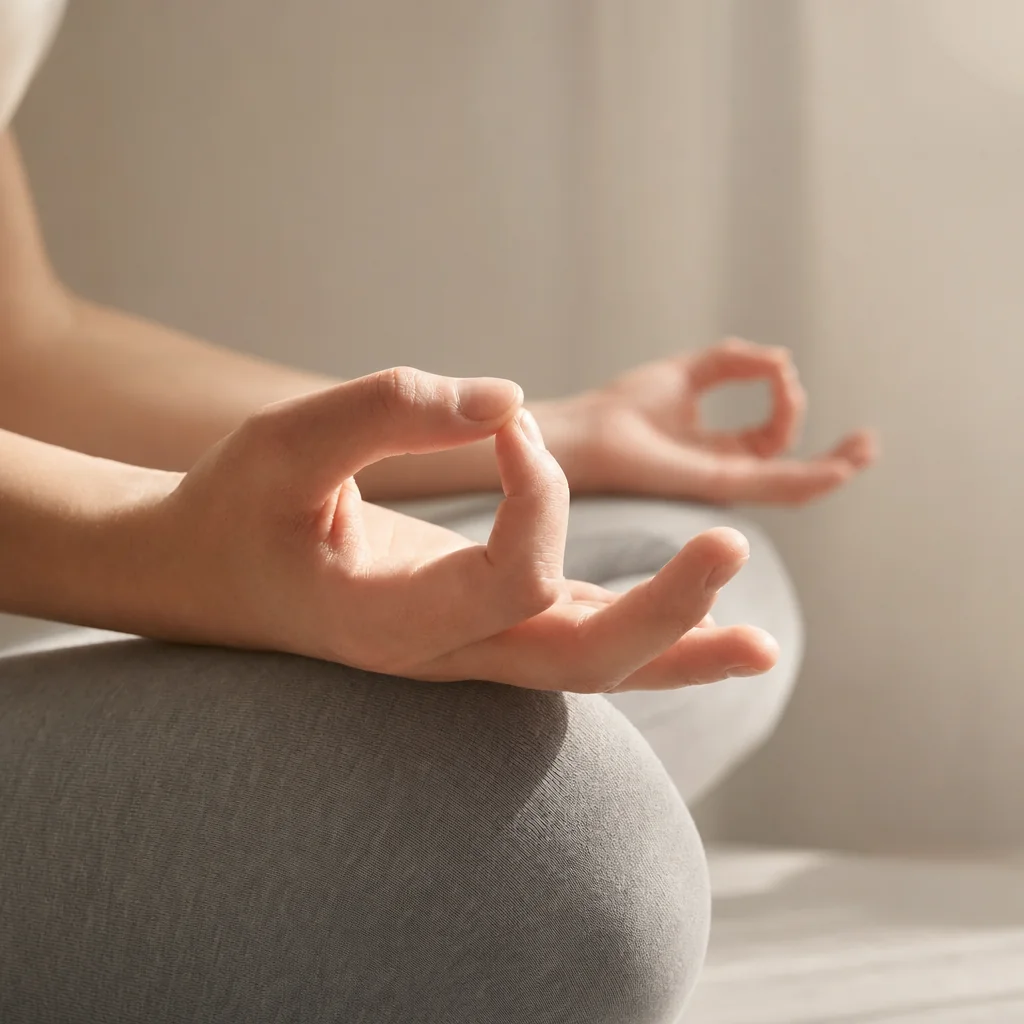
You do not need to start with advanced techniques. These three are safe for beginners and already produce real change with just a few minutes a day.
1. Full yogic breath (dirgha pranayama)
The foundation of everything. Learning to breathe using the three «chambers» of the torso: belly, ribs, upper chest.
- Lie down or sit comfortably with the spine long.
- Inhale, filling first the belly, then the ribs, finally the upper chest.
- Exhale, emptying in reverse order: chest first, then ribs, finally belly.
- Start with 5 minutes a day.
It is the best starting point if you have never worked with your breath before.
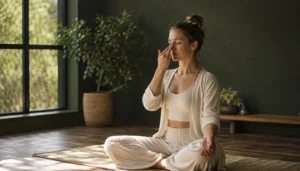
2. Alternate nostril breathing (nadi shodhana)
Balances the two brain hemispheres and deeply calms the mind. Its name means «purification of the channels».
- Sit comfortably with the spine long.
- Close the right nostril with the thumb and exhale fully through the left.
- Inhale through the left nostril.
- Close the left with the ring finger and release the right. Exhale through the right.
- Inhale through the right. Close the right and exhale through the left.
- That is one cycle. Start with 5-7 cycles.
One of the most widely used practices to regulate anxiety and prepare the body for meditation.
3. Ujjayi (the ocean breath)
This is the breath taught in many hatha yoga classes because it pairs well with movement. It creates a soft sound in the throat, similar to ocean waves.
- Sit or stand with the spine long.
- Inhale and exhale through the nose by gently constricting the glottis (the swallowing area).
- The sound only happens if the air moves slowly. It does not need to be loud — only audible to you.
- Maintain the rhythm for 3-5 minutes.
Activates inner heat and focuses attention. Useful when the mind is racing.
When not to practise pranayama (precautions)
Pranayama is powerful. Not every technique is appropriate at every moment.
- Pregnancy: breath retentions (kumbhaka) and rapid-breath techniques (kapalabhati, bhastrika) are contraindicated. Gentle yogic breath and nadi shodhana without retention are safe.
- Uncontrolled hypertension: avoid techniques with prolonged breath retention.
- Acute anxiety or panic attacks: the technique needs adaptation. Fast breathing can worsen the state. Better to go straight to slow nasal breathing with a long exhalation.
- Recent trauma: if a person is in a grief or trauma process, pranayama can stir emotions. In those cases I work with extra care in my yoga for grief classes, always prioritising what the person needs that day.
If you have a serious medical condition, check with your healthcare professional first.
How to integrate pranayama into your daily life
You do not need to set aside 30 minutes a day. Continuous practice in small moments changes more than long, isolated sessions.
- On waking: 5 minutes of full yogic breath before getting up. Sets the tone of the day.
- Before a difficult conversation: 3 cycles of nadi shodhana in the car or the bathroom. Lowers heart rate and centres the mind.
- Before sleep: 4-8 breath (inhale 4, exhale 8) for 5 minutes in bed. Activates the parasympathetic system and prepares for sleep.
- While walking or cooking: simply lengthen the exhalation. No need to «sit and meditate».
If you want to deepen with guided practice, in my classes I work with pranayama integrated with asanas and meditation. More about my training on the about me page.
Frequently asked questions
How often should I practise pranayama? Five sustained minutes a day produce more change than one hour once a week. Start with something you can keep up.
Can I do pranayama if I have never done yoga? Yes. Conscious breathing requires no prior skill. The full yogic breath is accessible to anyone.
When will I notice the effects? Some changes are immediate (a sense of calm, clarity). The deeper changes (long-term nervous system regulation) appear after 4-6 weeks of daily practice.
Can I combine pranayama with meditation? Yes, and it is usually recommended. Conscious breathing prepares the mind to meditate. In fact, in the yogic tradition, pranayama is the natural step before meditation.
Can pranayama replace anxiety medication? It is not a replacement. It is a valuable complement. If you are in treatment, talk to your healthcare professional before making changes.
If after reading this you feel curious about trying pranayama with guidance, I invite you to one of my classes. Breath is one of the pillars of my teaching, alongside hatha yoga practice and the voice work when it appears.