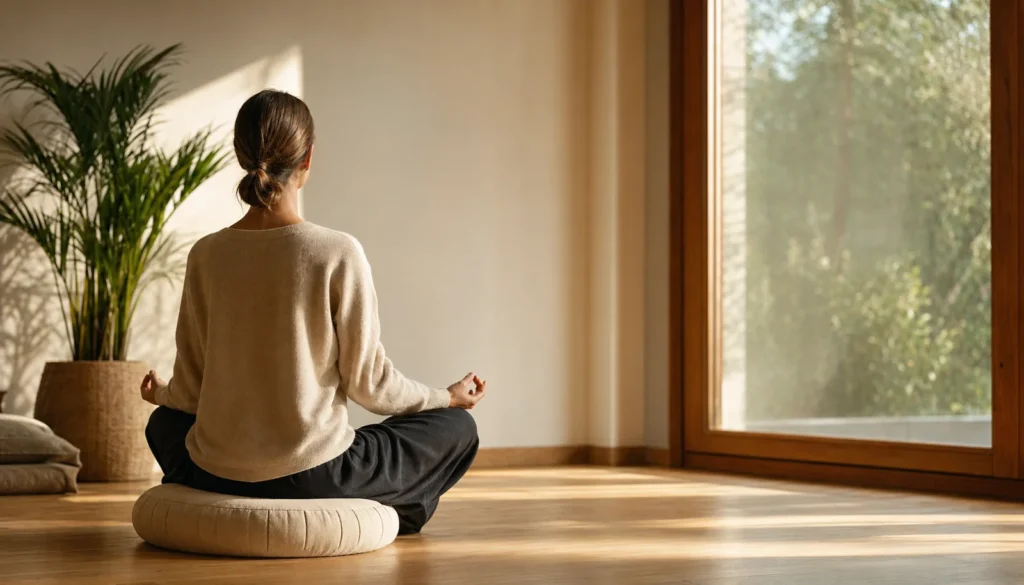
The first thing I need to tell you: meditation is not emptying the mind. If you have tried to meditate and felt that you were «doing it wrong» because the mind would not stop, what you are missing is not more discipline. It is understanding what meditation really is.
I am Clio Byrne, hatha yoga teacher (RYT 500) and certified music therapist by the Universitat Autònoma de Barcelona. I have held my own meditation practice for over twenty years and taught others to sustain theirs. What I am about to share is what actually works when you are starting out, without esotericism or promises of fast enlightenment.
What meditation is and is not
To meditate is to train attention. That is it. To hold it on something —the breath, a word, body sensations— and return to that something when the mind wanders. Each time the mind wanders and you return is one repetition of the exercise. Like a push-up for the muscle of attention.
This is not:
- Emptying the mind. It is impossible and not the goal.
- Sitting to «not think». Thoughts will appear.
- A mystical experience. Sometimes deep calm appears; other times you simply notice you are hungry. Both count as meditation.
- A technique to «feel good all the time». It is a technique to be more present, which sometimes includes being present with discomfort.
If you understand this, you are already meditating better than many people who have been at it for years.
Why the mind «never stops» (and why it does not matter)
The human brain is designed to think. Thinking is what it does constantly. Asking it to «be quiet» is like asking your stomach to stop digesting.
Meditation does not seek to silence the mind. It seeks to change your relationship with it. You start noticing your thoughts without getting caught in them. You see them pass like clouds in the sky. The mind keeps thinking, but you are no longer trapped inside every thought.
That alone is an enormous shift. And that is what the practice trains.
«Breathing in, I know I am breathing in. Breathing out, I know I am breathing out. The basic practice of mindfulness is as simple as that.»
— Thich Nhat Hanh, The Miracle of Mindfulness (1975)
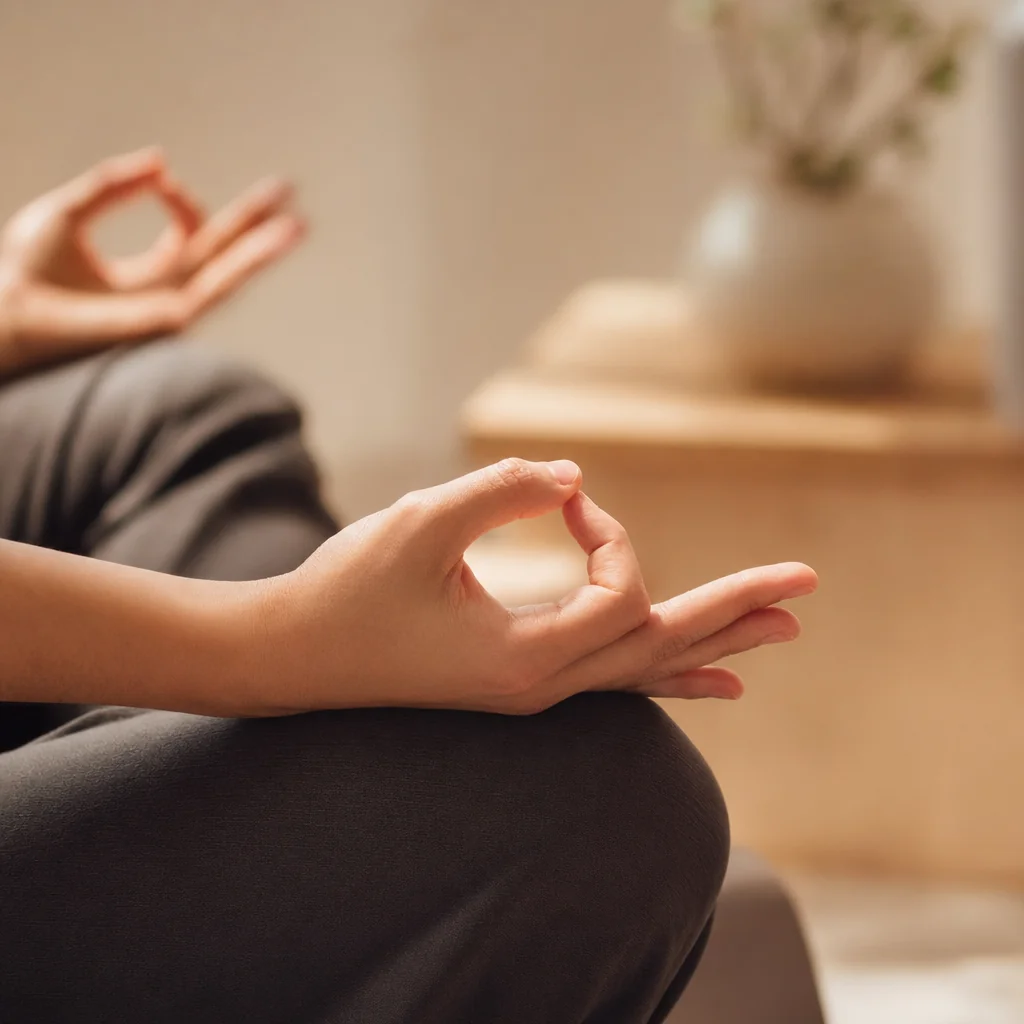
Five minutes a day is more than zero
The most common mistake when starting: wanting to do it «right» and reserving 30 minutes every morning. Three days later, the practice has already collapsed.
I propose the opposite: start with 5 minutes. Five sustained minutes a day for one month produce more change than one hour on a Saturday once a month.
When 5 minutes becomes a habit —usually after three or four weeks—, move up to 10. When 10 are stable, try 15. And so on. Without rush.
Duration is not what matters. What matters is that your nervous system registers that every day, without fail, there is a moment of pause.
Three accessible techniques to start
You do not need to try a thousand things. These three cover most needs. Pick one and stay with it for at least four weeks before changing.
1. Attention to the breath
The most basic and the most effective. It is what the Buddha taught and what is now the backbone of modern mindfulness.
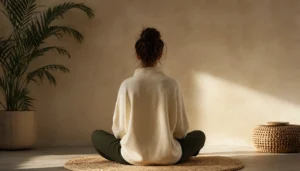
- Sit comfortably with the spine long (chair or cushion, either is fine).
- Close your eyes or keep them softly half-open.
- Bring your attention to the air entering and leaving through the nose. That is all.
- Whenever you notice the mind has wandered, return. Without reproach. Without «I am doing it wrong».
- Five minutes to start.
It is also called anapanasati and is probably the oldest meditation technique still practised today.
2. Mantra
Some people connect more with repeating a word or phrase. Mantra anchors attention when the breath feels «too abstract».
- Choose a word: «peace», «soham» (I am that), «shanti», «here» — whatever resonates.
- Repeat it mentally to the rhythm of your breath. One syllable inhaling, one exhaling.
- Whenever the mind wanders, return to the mantra.
- Five minutes.
Especially useful for very verbal minds that find it hard to «do something» if they only follow the breath.
3. Body scan
The technique I use most with people who arrive exhausted or overwhelmed. It returns you to the body from the thinking head.
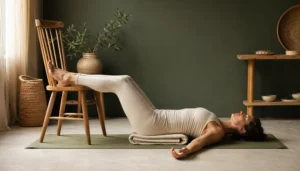
- Lie down comfortably with eyes closed.
- Bring attention to the crown of the head. Notice what is there (weight, tingling, nothing).
- Move attention slowly down: forehead, eyes, jaw, neck, shoulders… down to the feet.
- Do not try to change anything. Just notice.
- 8-12 minutes to complete the whole body.
The body scan is the foundation of Jon Kabat-Zinn’s MBSR programme and has been clinically studied for anxiety, chronic pain and sleep disorders.
When and where to meditate
You do not need an altar, incense, linen clothes, or special music. You need:
- A quiet place where you will not be interrupted for 5 minutes.
- A comfortable posture you can hold without moving. Chair, armchair, cushion, floor. Whatever works.
- A fixed time. The exact hour matters less than regularity. Most people work better in the morning, before the day begins.
- A soft timer. Phone vibration or singing bowl. Not an aggressive sound.
If you are interested in the more traditional and philosophical dimension of meditation —how it fits the path of yoga—, I recommend this other article: yamas and niyamas: the ethics of yoga beyond the mat.
Common mistakes and how to fix them
«I cannot empty my mind.» You do not have to. That is not the goal. Each time you return, that is the practice.
«I fall asleep.» Normal if you are exhausted. Try sitting instead of lying down, or practise on waking instead of before sleep.
«I get bored.» Boredom is information. It tells you the mind constantly seeks stimulation. Staying with boredom without pushing it away is part of the training.
«I do not notice anything.» Effects are not always evident during the session. They appear throughout the day: you react slightly less quickly to an upset, sleep slightly better, are less rattled by a comment. Continue.
«Difficult emotions arise.» Sometimes the practice surfaces what daily life had covered. If something too intense emerges (trauma memories, acute grief), seek professional support. Meditation is a complement, not a substitute.
How I integrate meditation into my classes
In my hatha yoga classes, every session ends with a few minutes of guided meditation. I find it essential: the body has moved, the breath has settled, the mind is more available. It is the best moment to sit in silence. More about my background on about me.
If you prefer autonomous practice at home, perfect: meditation sustains itself better alone than any other discipline. You only need a small commitment and the willingness to start again whenever the chain breaks.
Frequently asked questions
How long until I notice changes? Some things you notice the very first day (a sense of calm on getting up). Changes in how you respond to daily stress usually appear between week 4 and week 6.
Is meditation the same as mindfulness? Mindfulness is a specific form of meditation: attention to the present moment without judgement. There are other forms (mantra, visualisation, analytical meditation). Mindfulness is the most clinically studied in the West.
Do I have to be Buddhist or believe in something? No. The techniques come from spiritual traditions but they work regardless of your beliefs. Brain physiology responds to sustained attention whether you believe in it or not.
Can I meditate if I have anxiety? Yes, with nuances. If anxiety is intense, start with techniques that anchor in the body (body scan, attention to the feet on the floor) before practising attention to the breath. If you have a clinical diagnosis, consult your professional first.
Does an app work as well as a teacher? It works. It is not the same, but it works. An app can keep you on the chain for years. A teacher or a group brings another dimension: correction, questions, contrast with other experiences.
Start today. Five minutes. Tomorrow, start again. And the day after.