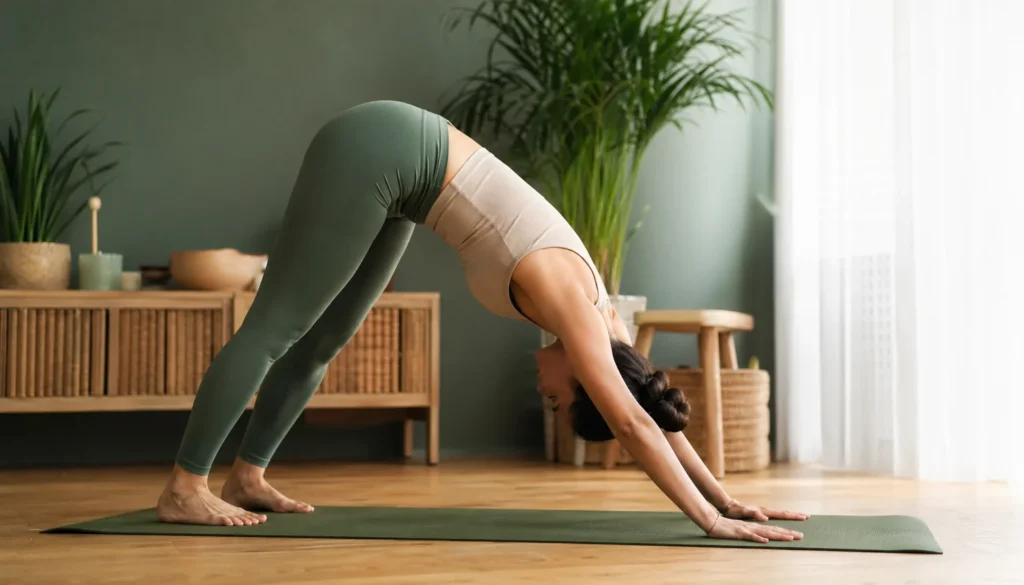
Adho mukha svanasana, downward facing dog, is probably the most recognisable posture in modern yoga. It is also, paradoxically, the one most often misperformed when learnt alone. Twenty years correcting it in class make this clear: almost nobody gets it right the first time, and many people keep doing it badly after years.
Here is the correct alignment step by step, the most common mistakes and how to fix them, useful modifications and when not to practise it. A posture deserving its own article because it appears in almost every sequence.
What it does and why it matters
Down dog works simultaneously:
- Spinal lengthening in the sagittal plane (decompresses).
- Shoulder opening in full flexion.
- Posterior chain stretch (hamstrings and calves).
- Isometric strength of shoulders, arms and core.
- Soft inversion giving venous return without cardiovascular risk.
Correct alignment step by step
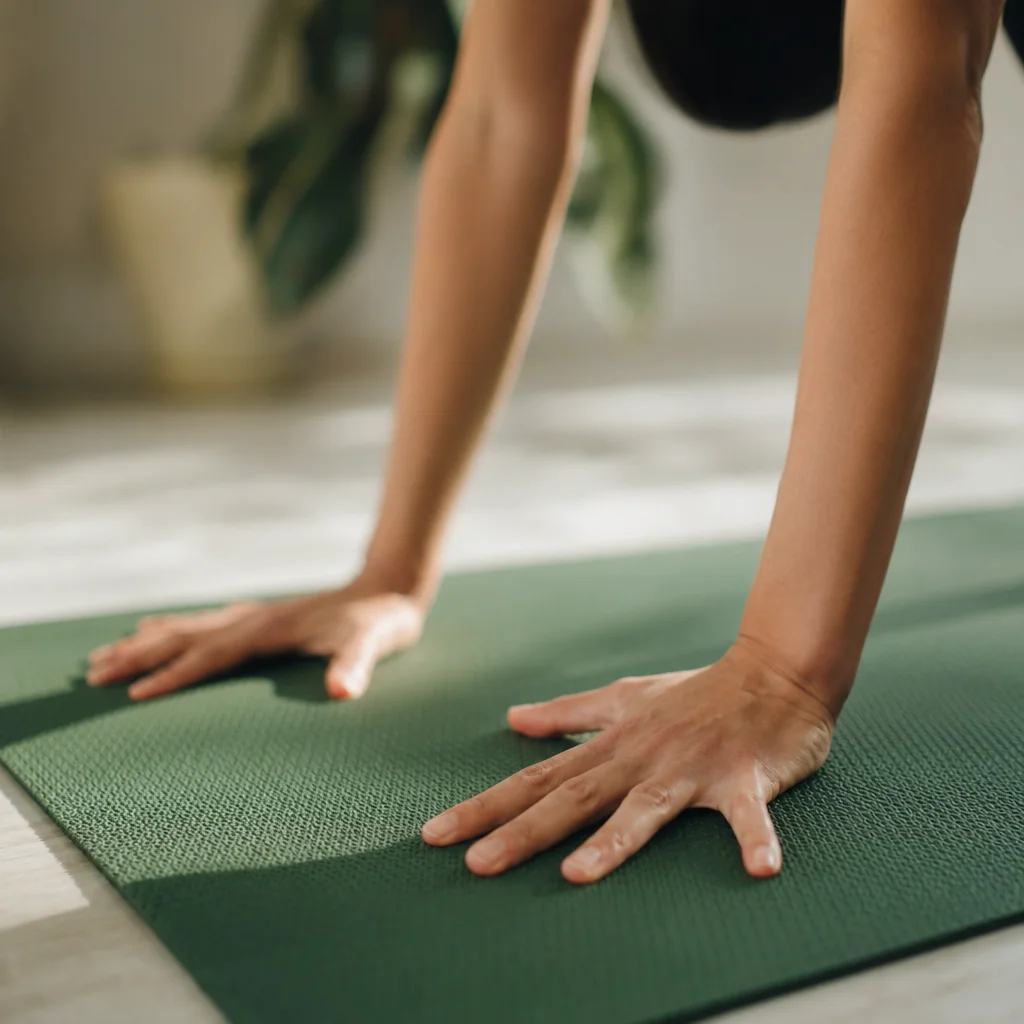
- Start on all fours. Hands under shoulders, fingers spread, middle finger pointing forward, weight on thumb and index knuckles as much as the rest. Knees under hips, toes tucked.
- Lift hips to ceiling. Without straightening the legs yet. Hips back and up.
- Find the inverted V. Body forms a triangle.
- Lengthen the spine first. Before thinking about straightening legs, prioritise spinal length. If the back rounds, bend the knees more.
- Only then begin to straighten legs. Only as far as the spine can stay long. Don’t force heels to floor: they descend on their own.
- Shoulders away from ears. Activate external shoulder rotation by turning elbow creases forward.
- Relaxed head. Neck in line with spine. If head hangs without control, bend the knees more.
- Gaze towards navel or a point between the feet.
The 6 most frequent mistakes
- Rounded back. Most common. Cause: chasing heels-down at expense of spine length. Fix: bend knees. Always.
- Shoulders hunched to ears. Neck tension. Fix: external shoulder rotation, slide shoulder blades towards hips.
- Hands too close to feet. Body compresses. Fix: generous distance between hands and feet.
- Weight only on outer hand edge. Wrist strain. Fix: even weight on all four knuckles.
- Head forced up. Cervical strain. Fix: neck in line, gaze down.
- Feet too wide or too narrow. Ideal: hip-width.
Useful modifications
- Fragile wrists: hands on closed fists, or on blocks with fingers wrapping the block. Or rest the forearms (forearm dog).
- Stiff posterior chain: knees bent most of the time. Heel height doesn’t matter.
- Inversion makes you dizzy: assisted version with hands on a wall (standing dog against wall, hips at 90°).
- Pregnancy (2nd and 3rd trimester): modified version with feet wider (shoulder-width) and knees more bent to avoid abdominal compression.
“In downward dog the body teaches itself while holding its own weight. It’s a conversation between strength and release.”
B.K.S. Iyengar, Light on Yoga (1966)
When not to practise
- Acute wrist, shoulder or elbow injury.
- Uncontrolled hypertension (head below heart).
- Acute vertigo or inner-ear issues.
- Third trimester of pregnancy if uncomfortable.
- Glaucoma or retinal detachment (any inversion contraindicated).
- Heavy menstrual day if it bothers you.
Progressive hold time
- Beginner: 5 breaths × 3 sets resting in child’s pose between sets.
- Intermediate: 8-10 breaths × 3 sets.
- Advanced: 1 minute held with soft ujjayi breath.
If you want to learn downward dog properly from the start (or correct it after years of doing it badly), at my Barcelona studio we work this posture with direct correction in small classes.