Pranayama is one of yoga’s most powerful tools. Also one of the least understood in the West, where the visual focus of postures has taken centre stage. But anyone who’s practised for years knows: asanas prepare the body, pranayama transforms the nervous system.
Here are the 7 pranayama techniques I consider essential, the physiological effect of each, when to choose which based on your state, and the precautions worth respecting. We’ll work from the classical foundation (Krishnamacharya/Iyengar lineage) and contemporary vagus-nerve physiology.
Why breath changes the nervous system
Breath is the only autonomic function you can also control voluntarily. This makes it a direct gateway to the autonomic nervous system: slowing the exhale activates the parasympathetic branch (calm); speeding and deepening the inhale activates the sympathetic branch (alertness). Knowing which pranayama to choose is knowing what you need in each moment.
The 7 essential techniques
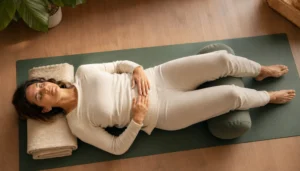
1. Diaphragmatic breath (the base)
Not strictly classical pranayama, but without this the rest don’t work. Inhale letting the abdomen expand first (not the chest), exhale relaxing the abdomen. Five minutes a day, lying down, hand on belly. Everything else builds on this base.
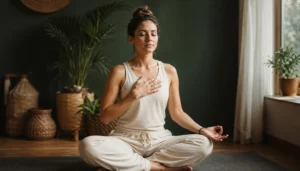
2. Ujjayi — ocean breath
The most-used pranayama in modern yoga. A soft glottal closure produces an audible vibratory sound through the nose. Sharpens attention and slightly lengthens the exhale. Pairs perfectly with asana practice.
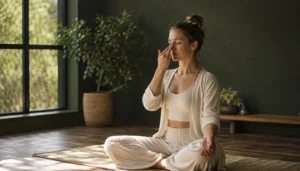
3. Nadi shodhana — alternate-nostril breath
Inhale one nostril, exhale the other, alternating. Balances the cerebral hemispheres and the autonomic nervous system. Probably the most useful pranayama for general health, especially with anxiety or irregular sleep.
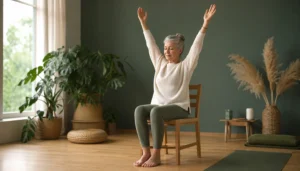
4. Kapalabhati — fire breath
Short forced exhalations with abdominal contraction, passive inhalations. Strongly activates the sympathetic nervous system. Useful for waking up, for energetic cleansing, for sluggish mornings. Contraindicated in pregnancy, uncontrolled hypertension, hernia, heavy menstruation and any unsupervised cardiovascular condition.
5. Bhramari — bee breath
Exhale with a soft humming through the nose, fingers gently closing the ears. The vibration directly stimulates the vagus nerve through the skull. One of the most useful pranayamas for acute anxiety and falling asleep. Three minutes before bed change the quality of your rest.
6. Sitali — cooling breath
Inhale through the rolled tongue like a straw, exhale through the nose. Cooling, settles internal heat. Ideal in menopausal hot flashes, summer heat and irritability. If you can’t roll your tongue genetically, swap for sitkari (inhale between teeth).
7. 4-8 breath — extended exhale
Inhale 4, exhale 8. No retention. The simplest pranayama and possibly the most useful for regulating acute anxiety. Five minutes can bring down a crisis.
“Breath is the bridge between life and consciousness. Master it and you master your mind.”
B.K.S. Iyengar, Light on Pranayama (1981)
Which one to choose by your state
- To start the day with energy: kapalabhati (if not contraindicated).
- For focus and mental work: nadi shodhana 5 minutes.
- To accompany asana practice: ujjayi throughout.
- For acute anxiety: 4-8 breath or bhramari.
- For falling asleep: bhramari + 4-8 alternated.
- In perimenopause / hot flashes: sitali / sitkari.
- As daily health practice: nadi shodhana 10 minutes.
How to build your pranayama practice
Start with diaphragmatic breath. One week, 5 minutes a day. When the diaphragmatic breath feels natural and silent, add nadi shodhana 5 minutes. After a month with both, add ujjayi accompanying your asana practice. Move to advanced techniques only once the basics are stable.
Activating techniques (kapalabhati, bhastrika) always require in-person learning with an experienced teacher. Don’t practise them from a video. Calming techniques (4-8, bhramari, nadi shodhana) are safe to learn at home.
If you want to learn pranayama with presence and direct correction, at my Barcelona studio we integrate pranayama into every hatha yoga class.