Sound therapy has become very popular in recent years. Tibetan bowls, gongs, sound baths at festivals, YouTube videos of “healing frequencies”. With popularity have come both useful information and inflated expectations. Let’s separate the two.
Here is what sound therapy honestly is: what effects are documented, what a real session looks like, what to expect and when it isn’t the right tool. I write from specific training in sound therapy integrated within my Master’s in Music Therapy (UAB) and accumulated clinical practice in individual and group sessions.
What sound therapy is
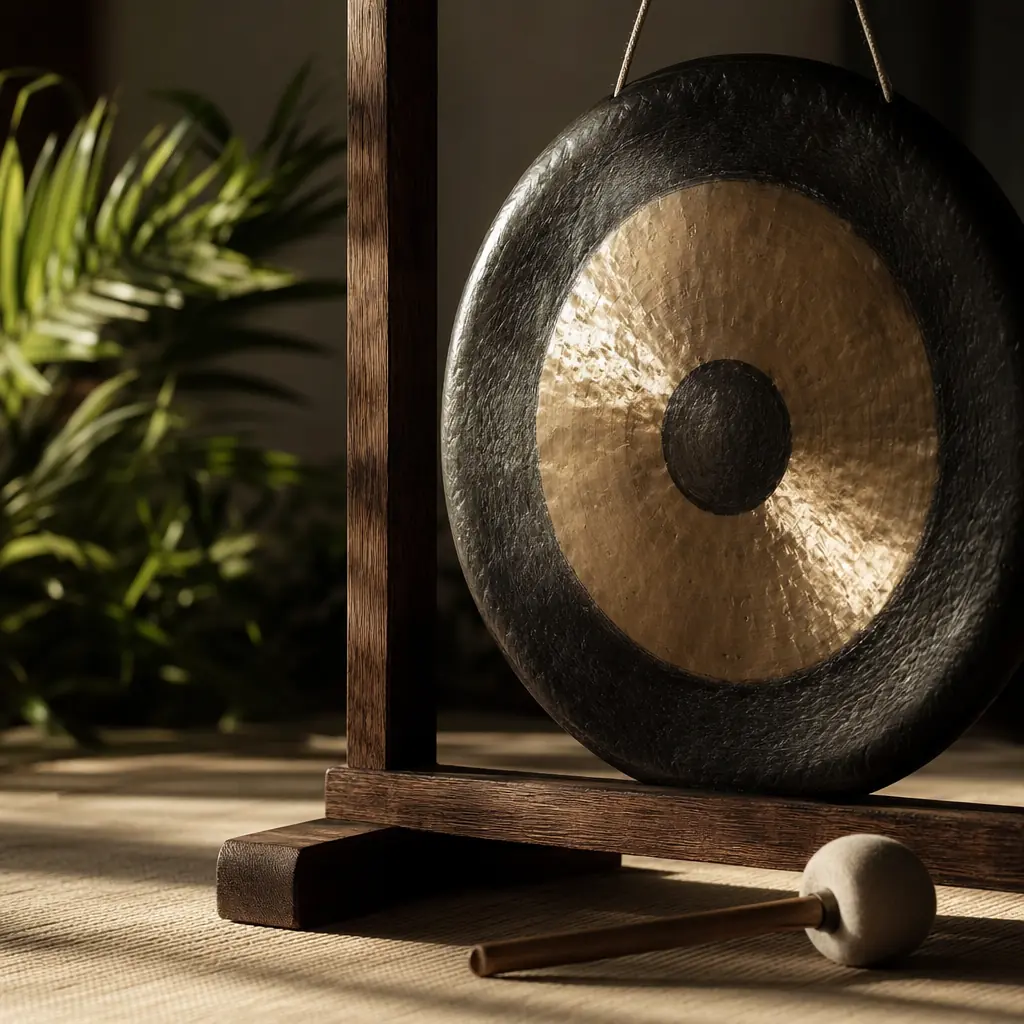
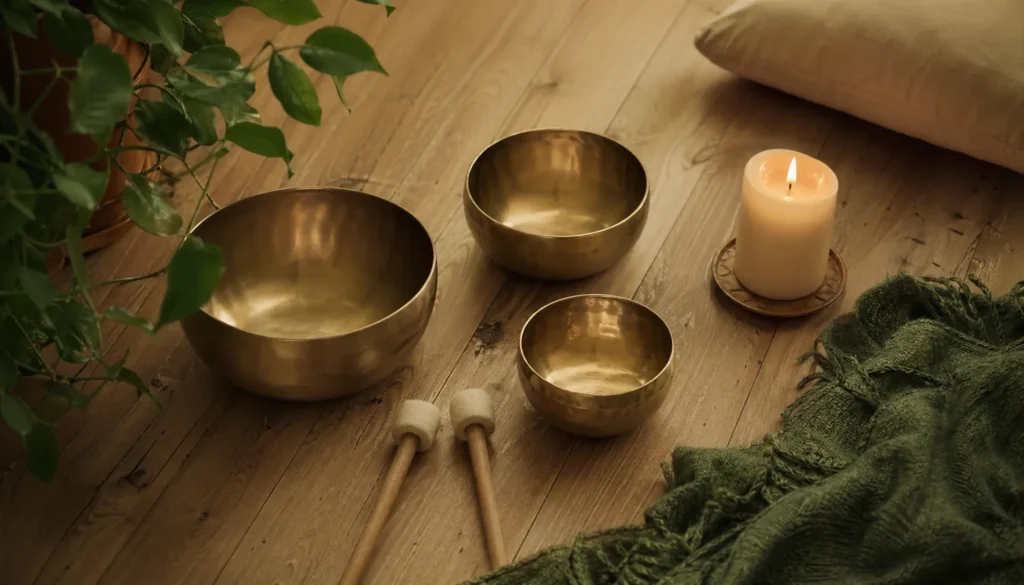
Sound therapy is the intentional use of sound — especially sustained vibratory sounds — to induce deep relaxation states and, secondarily, accompany emotional regulation processes. Common tools: Tibetan bronze bowls (sustained sound), crystal bowls (higher and longer sound), gongs (broad harmonic spectrum), shamanic drums and the human voice.
It is not the same as music therapy: sound therapy works primarily with sustained, receptive sound (you lie down, someone plays the instruments, you receive); music therapy is broader work that may include active improvisation, singing and structured psychological processing.
What research shows (and what it doesn’t)
Honestly: clinical research in sound therapy is limited, especially compared with music therapy which has decades of evidence. What is documented:
- Reduction in salivary cortisol after 30-60 minute sessions with Tibetan bowls (several small studies, effects comparable to guided meditation).
- Self-reported reduction in anxiety and pain in oncology patients as complementary practice.
- Subjective sleep improvement in people with mild to moderate insomnia.
What is not demonstrated is that “healing frequencies” (528 Hz, 432 Hz, etc.) have specific effects beyond the general relaxation response. That is marketing, not research.
What a real session looks like
An individual session is 60 minutes. Typical structure:
- Initial conversation (5-10 min). How you arrive, what you bring today.
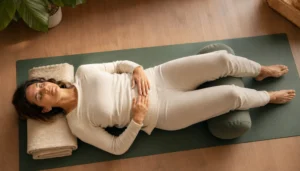
- Postural setup (5 min). You lie on a mat with blanket and bolster under the knees. Side-lying works too.
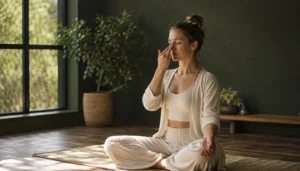
- Guided breath work (5 min). To enter parasympathetic state.
- Central sound bath (35 min). Tibetan bowls placed strategically around the body and, at moments, on the body (not every therapist uses that variant; ask first). Some bowls produce tactile vibration that is felt physically.
- Integrative silence (5-10 min). The most important part of the session happens here.
- Closing and check-out (5 min).
“Sustained sound is the only non-pharmacological intervention capable of inducing, in minutes, an autonomic state equivalent to deep sleep without loss of consciousness.”
Edith Lecourt, Découvrir la musicothérapie (1988)
Realistic effects to expect
- Immediate (during session): bodily heaviness, slowed heart rate, possible drowsiness, occasional emotional release (tears with no identifiable cause).
- In the hours after: mental clarity, better sleep that night, an “internal cleansing” feeling (it’s the deep relaxation response, not chakras aligning).
- After several sessions: better habitual sleep, reduction in accumulated muscle tension, greater capacity for calm response to daily stress.
What sound therapy is not
- It does not cure illness. It accompanies; it doesn’t replace medical or psychiatric care.
- It does not measurably align chakras. If you’re told it does, be skeptical.
- It is not a guaranteed mystical experience. Some sessions are simply deep rest, and that is enough.
When it is not advised
- Photosensitive or sound-triggered epilepsy.
- First trimester of pregnancy (consult obstetrician).
- Cardiac pacemakers (bowls on the body should not be used).
- Acute psychiatric phase.
If you’d like to try a sound therapy session, at my Barcelona studio I offer individual and small-group sessions. The first one is a trial so you can see if it fits you.