When you think of yoga, you probably think of postures. They’re the most visible part. But postures (asanas) are only one of the eight limbs that compose classical yoga according to Patanjali’s Yoga Sutras (c. 2nd century BCE). The other seven are less visible but no less important. In fact, they are what give the practice real depth.
Here are the eight limbs (ashtanga literally means “eight limbs” in Sanskrit) with their contemporary meaning, no jargon and no blind reverence, so you can see the full map of yoga and understand where what you’re practising fits.
The 8 limbs in order

1. Yamas — outer ethics
The five observances that regulate your relation to the world: ahimsa (non-harming), satya (truth), asteya (non-stealing), brahmacharya (moderation), aparigraha (non-grasping). The ethical floor on which everything else rests.
2. Niyamas — inner observances
The five observances that regulate your relation to yourself: saucha (cleanliness), santosha (contentment), tapas (discipline), svadhyaya (self-study), ishvara pranidhana (surrender).
3. Asana — posture
Postural work. The most visible limb and, in the West, the one that has taken nearly all the space. In the original context asana meant “meditation seat”: a comfortable stable posture allowing one to stay long without bodily distraction. Over time it has expanded to the broad postural practice we know today.
4. Pranayama — conscious breath
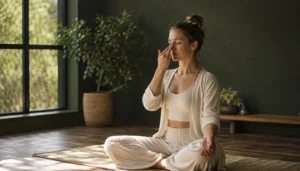
Intentional conduct of prana (vital energy, understood in practice as breath). The techniques that regulate the nervous system through breath.
5. Pratyahara — sense withdrawal
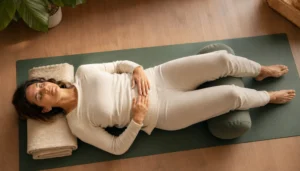
The capacity to withdraw attention from external stimuli to direct it inward. Contemporary version: “giving yourself permission not to respond to the notification”. Cultivated through yoga nidra, voluntary silence, digital fasting and, simply, closing the eyes in savasana.
6. Dharana — concentration
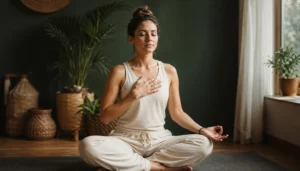
Holding attention on a single object: a breath, a candle, a mantra, a body sensation. The antechamber of meditation: the trained mind able to fix without strain. Three minutes sustained on a point are already dharana practice.
7. Dhyana — meditation
Sustained concentration that has become so stable it no longer requires effort. The difference with dharana is subtle: in dharana someone observes an object; in dhyana, observation has become fluid, with no sense of “I observing”. You don’t decide to enter dhyana: you arrive after regular dharana practice.
8. Samadhi — absorption
The state where the separation between observer and observed dissolves. The most debated limb and the hardest to explain without falling into mystical language. Patanjali describes it as the culmination of the path. Most practitioners never get there, and you don’t need to in order for yoga to deliver all its benefits.
“Yoga citta vritti nirodhah — yoga is the cessation of the fluctuations of the mind.”
Patanjali, Yoga Sutras I.2 (c. 2nd century BCE)
How they relate to each other
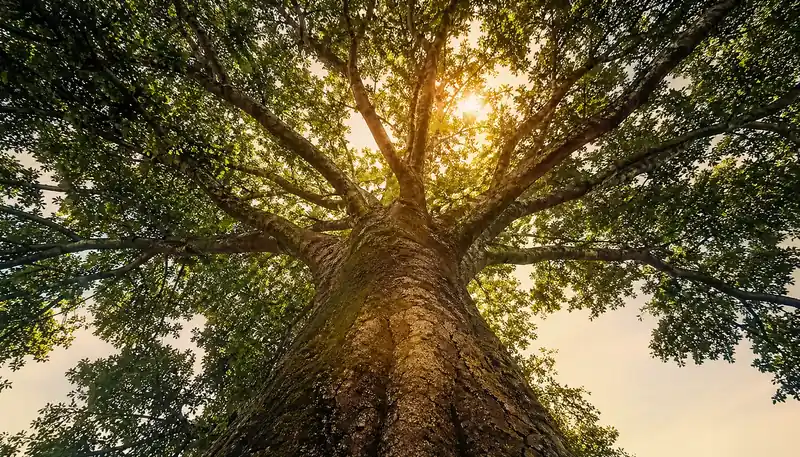
Although numbered 1 to 8, they’re not a ladder. Patanjali presents them as branches of one tree: each supporting the others. Without yamas and niyamas, postures are gymnastics. Without pranayama, postures are exercise. Without pratyahara, no meditation is possible. Without dharana, dhyana is impossible.
The most common mistake when studying this map is to think “I have to master yamas before doing asana”. It doesn’t work like that. They are worked in parallel. A living practice integrates several layers at once, even if each at a different level.
How to apply this map to your practice
- If you only do asana: add 3 minutes of pranayama at the end of each practice (4-8 breath works). That already integrates two limbs.
- If you already do pranayama: add 5 minutes of meditation after savasana (concentration on breath).
- If you already meditate: work explicitly with one of the yamas or niyamas each month in daily life.
Yoga is not measured by the complexity of the asanas you master. It is measured by how many of the eight limbs you have active in your life.
At my Barcelona studio I integrate all eight limbs into every class, not just asana. If you want a practice with this depth, first class is a free trial.