Yoga for anxiety works, but not for the reasons you hear in a generic yoga class. It works because it acts where anxiety lives: in the autonomic nervous system. Specifically, in the over-activated sympathetic branch and in low vagal tone. When you understand that physiology, you stop doing “relaxing yoga” and start doing precise yoga for your system.
Here are the techniques that are actually useful according to physiology, what to avoid if you have anxiety crises, and when to combine yoga with psychotherapy. I write from my training in therapeutic yoga applied to emotional regulation and twenty years accompanying students through anxious processes.
How yoga acts on anxiety
Anxiety is, physiologically, a sustained sympathetic autonomic system. Elevated heart rate, short thoracic breath, muscle tension, high cortisol. Yoga acts on three points:
- Parasympathetic activation via the vagus nerve. Prolonged exhalation and nasal breath stimulate the vagus, the main “brake” of the autonomic nervous system.
- Cortisol reduction. Regular 8-12 week practice shows measurable decreases in controlled studies.
- Interoception. Yoga trains the ability to notice body sensations before they escalate, allowing intervention before the crisis.
The 5 techniques that work
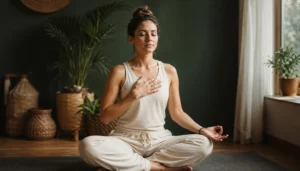
1. 4-8 breath (first line)
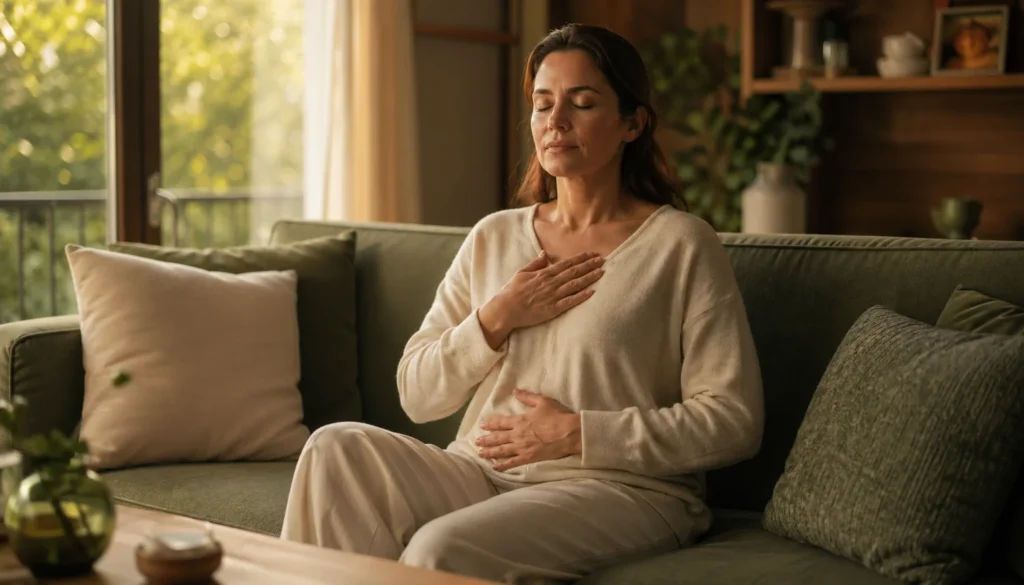
Inhale 4, exhale 8. No retention. The prolonged exhale directly activates the vagal brake.
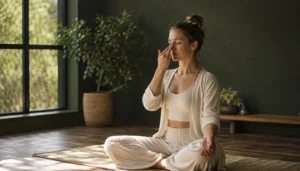
2. Bhramari (bee breath)
Exhale with a soft hum through the nose, fingers closing the ears. The vibration stimulates the vagus nerve through the skull. Three minutes can bring down an acute crisis.
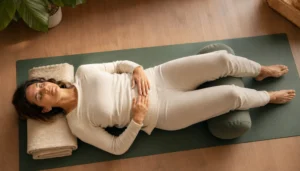
3. Supported restorative postures
Sustained savasana with bolsters, viparita karani (legs up the wall with a cushion under the hips), supported supta baddha konasana. All held 8-15 minutes. Sustained stillness with support deactivates the sympathetic response.
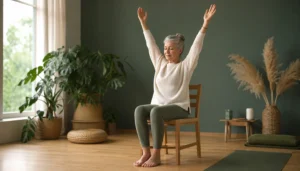
4. Slow spinal movement
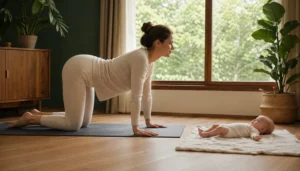
Cat-cow, slow shoulder circles, gentle pelvic rotations. Slow movement tells the nervous system there’s no threat, there’s safety. Five minutes on waking.
5. Conscious outdoor walking
20-30 min walk at moderate pace, wide gaze (not fixed on phone), nasal breath. One of the most studied and cheapest practices to reduce anxiety. Not yoga but the logic is the same: body moving, attention open, breath controlled.
“Anxiety is not defeated: it is regulated. And it is regulated from the body, not from thought.”
Stephen Porges, The Polyvagal Theory (2011)
What to avoid in high anxiety
- Hot yoga, bikram and extreme-heat practices. Heat activates sympathetic.
- Activating pranayamas. Kapalabhati, bhastrika, breath of fire. Activate exactly what you’re trying to calm.
- Fast vinyasa with loud-music classes. Over-stimulation during practice.
- Long inversions if your anxiety includes dizziness or depersonalisation.
- Long-retention pranayamas in acute phase: can trigger smothering sensation.
When to combine with psychotherapy
Yoga is complementary, not substitute, to psychotherapy when there is:
- Diagnosed generalised anxiety disorder.
- Recurrent panic attacks.
- Trauma-related anxiety.
- Anxiety significantly affecting daily functioning.
- Suicidal or self-harming ideation.
Yoga accompanies, regulates, makes daily life more manageable. Psychotherapy works the cause, the cognitive patterns, the context. Both together produce results neither delivers alone.
A 15-minute daily routine
If you want to work anxiety steadily, here’s the minimum viable routine:
- Morning (5 min): 4-8 breath seated in bed before getting up.
- Midday or work break (3 min): bhramari (10 cycles) seated or standing.
- Night (7 min): viparita karani with 4-8 breath + 2 min savasana.
15 minutes spread across the day produce measurable effect in 4-6 weeks. The difference between someone who says “yoga helps with my anxiety” because they take a weekly class and someone who actually regulates their system with consistency.
If anxiety is persistent or severe, an individual therapeutic yoga session is the right tool. Free initial conversation.